The Psychology of Place
There is a moment in every project when the land reveals how it wants to be lived with. It is subtle. It is quiet. It is often missed by people who approach a site only through spreadsheets or zoning maps. But for those of us who work at the intersection of architecture, emotion, and long horizon living, that moment is everything. It is the point where the psychology of place begins to shape the design.
The psychology of place is the study of how environments influence human behavior, perception, and wellbeing. It is not abstract theory. It is the reason a client feels calm on one parcel and uneasy on another. It is why a desert butte feels sovereign, why a lakeshore feels restorative, and why a cenote feels ancient and grounding. These reactions are not random. They are physiological and emotional responses to the cues embedded in the land.
UHNW families often choose land based on instinct long before they articulate the reason. A client may say, “I do not know why, but this place feels right.” That feeling is the psychology of place at work. The land is speaking through light, horizon, enclosure, exposure, sound, and the subtle geometry of how the body moves through space.
Architects translate those signals into form.
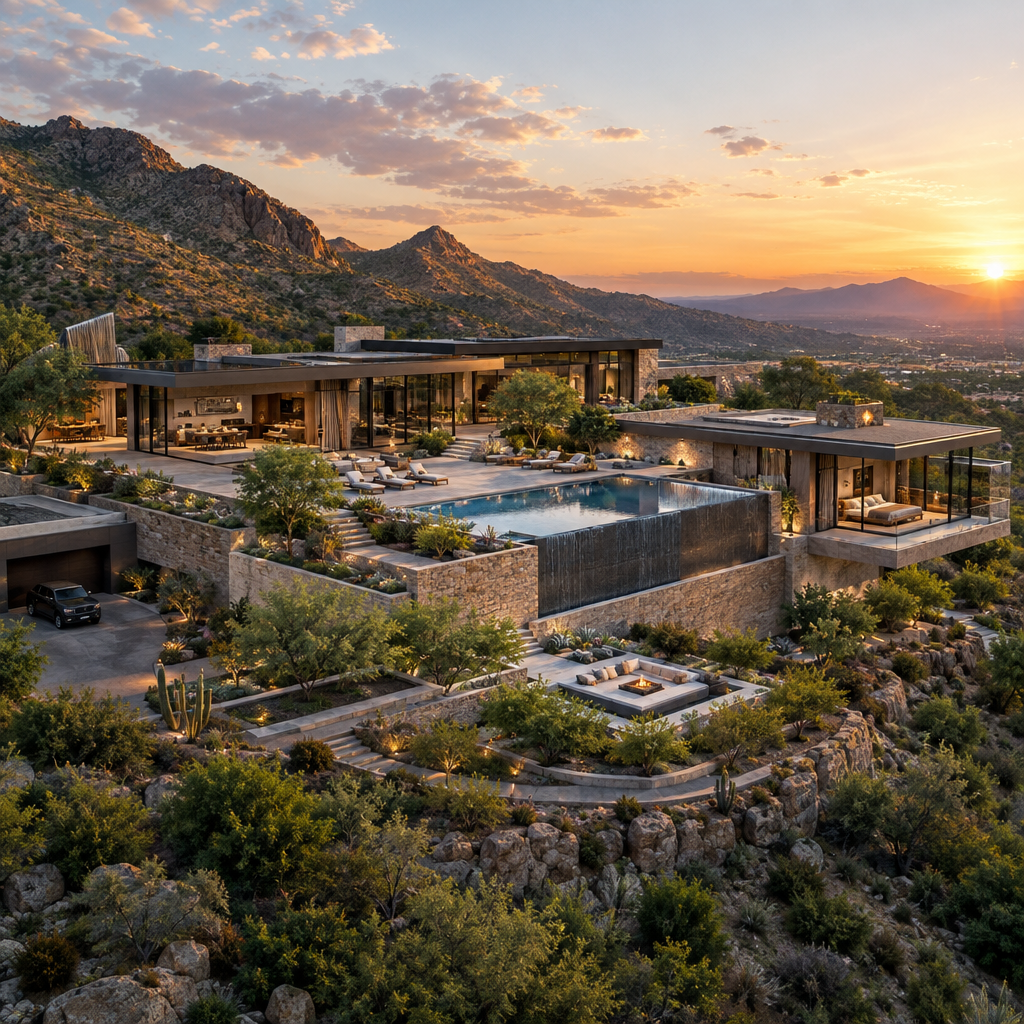
A site with a long horizon invites stillness and contemplation. A site with vertical drama invites awe and perspective. A site with water invites reflection and emotional grounding. A site with dense forest invites protection and intimacy.
This is why the most extraordinary homes are inseparable from their land. They are not placed on a site. They are grown from it. They respond to the emotional signature of the environment rather than imposing a foreign logic.
In my work with VerdeLuxe HyperHomes, the psychology of place is the first design tool. A cenote becomes the emotional anchor of a home because humans respond to depth and stillness. A desert spire becomes a sanctuary because elevation creates perspective and sovereignty. A lakeside estate becomes a generational refuge because water stabilizes mood and anchors memory.
Gatekeepers understand this intuitively. When a broker walks a client onto a parcel and sees their shoulders drop, their breath slow, or their voice soften, they are witnessing the psychology of place in real time. Wealth advisors see it when a client chooses privacy over proximity. Builders see it when a client chooses a difficult site because it feels meaningful rather than convenient.
The psychology of place is not a design trend. It is a human truth. It is the reason certain environments become legacy assets while others become liabilities. It is the reason sovereign estates feel inevitable. And it is the reason the land must be understood before a single line is drawn.
For those who work with UHNW families, this is the insight worth carrying forward. Clients are not choosing land. They are choosing how they want to feel for the next fifty years. The architecture simply gives that feeling a form.